
About admin
This author has not written his bio yet.
But we are proud to say that admin contributed 8 entries already.
Entries by admin
Drone Maintenance: Proactive vs Reactive – Protecting Your Investment in the Air
Whether you’re flying commercially or recreationally, drone maintenance isn’t just a box-ticking exercise — it’s what keeps you safe, compliant and operational.
At Buzz Drones, we see it all the time: incredible aircraft grounded for issues that could have been avoided with a simple inspection or scheduled replacement. On the flip side, we also see pilots flying beyond sensible component life, increasing risk unnecessarily.
This guide breaks down the two core types of drone maintenance:
-
Proactive (Scheduled) Maintenance
-
Reactive (Corrective) Maintenance
Both matter. Both have their place. And understanding the difference protects your aircraft, your reputation, and your wallet.
Why Drone Maintenance Matters (Commercial & Recreational)
Modern drones — especially platforms like the DJI enterprise range — are sophisticated pieces of aviation technology. They’re exposed to:
-
Wind loading
-
Vibration
-
Moisture
-
Temperature variation
-
Transport stress
-
Firmware and software dependencies
For commercial operators, poor maintenance can mean:
-
Lost contracts
-
Safety incidents
-
Insurance issues
-
CAA scrutiny
For recreational pilots, it can mean:
-
Avoidable crashes
-
Expensive replacements
-
Loss of aircraft mid-flight
Drone maintenance isn’t about paranoia. It’s about professionalism.
Learn more about our commercial drone services here: Buzz Drones’ Services

Proactive Drone Maintenance (Scheduled Maintenance)
Proactive maintenance is planned. It’s controlled. It’s deliberate.
It means replacing or servicing components before they fail — based on flight hours, charge cycles, or manufacturer guidance.
This is where most serious operators separate themselves from hobby flying.
1. Battery Management & Replacement
Drone batteries are consumables. They degrade over time — even if treated well.
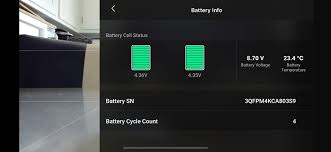
For enterprise and commercial operators, battery monitoring should include:
-
Tracking charge cycles
-
Monitoring internal cell deviation
-
Checking swelling or casing damage
-
Recording flight hours
At certain thresholds, batteries should be retired from primary operations.
Not because they’ve failed — but because you don’t wait for them to.
That’s proactive maintenance.
2. Propeller Replacement Intervals
Propellers endure constant stress:
-
Micro-fractures from vibration
-
Edge wear from debris
-
Structural fatigue from repeated load
Even if they “look fine”, hours flown matter.
Replacing propellers at scheduled intervals is inexpensive insurance compared to an in-flight failure.
For commercial operators especially, documenting propeller replacement intervals demonstrates operational discipline.
3. Firmware & System Checks
Drone maintenance isn’t only physical.
Scheduled checks should include:
-
Firmware updates (aircraft, controller, batteries)
-
IMU and compass calibration (when required)
-
Gimbal inspection
-
Sensor cleaning
-
Obstacle avoidance system testing
This ensures systems are aligned and operating within manufacturer tolerances.
DJI official maintenance guidance: DJI Maintenance Guidance
4. Log Keeping & Airframe Hours
Commercial operators should log:
-
Total airframe hours
-
Battery cycles
-
Incident reports
-
Environmental exposure (rain, dust, coastal flying)
Tracking usage allows intelligent maintenance decisions instead of guesswork.

Reactive Drone Maintenance (Corrective Maintenance)
Reactive maintenance happens after something goes wrong — or when wear is identified unexpectedly.
It’s unavoidable at times. The key is handling it properly.
Common Reactive Maintenance Scenarios
-
Hard landings
-
Prop strikes
-
Gimbal overload errors
-
Motor imbalance warnings
-
Water ingress
-
Firmware corruption
-
ESC or power system faults
When an issue is identified, grounding the aircraft is the responsible choice — especially for commercial work.
There’s no contract worth risking a failure in the air.
Manufacturer-Authorised Repairs (Peace of Mind Matters)
For anything structural, electrical, or internal, authorised repair centres should be used.
At Buzz Drones, we use HeliGuy for official DJI maintenance and repairs. As an authorised DJI centre in the UK, this provides reassurance that:
-
Genuine DJI parts are used
-
Repairs meet manufacturer standards
-
Warranty considerations are protected
-
Documentation is properly recorded
For commercial operators especially, that traceability matters.
Commercial vs Recreational Maintenance – Is There a Difference?
The principles are identical.
The difference lies in accountability and exposure.
Commercial operators:
-
Carry higher liability
-
Fly more frequently
-
Operate in varied environments
-
Rely on aircraft for revenue
Recreational pilots:
-
May fly less frequently
-
Often store drones longer between flights
-
Sometimes overlook battery degradation
Both benefit from proactive maintenance. The scale may differ — but the mindset shouldn’t.
Signs Your Drone May Need Attention
If you notice any of the following, consider grounding and inspecting:
-
Increased vibration
-
Shortened flight time
-
Random warnings
-
Motor noise changes
-
Gimbal jitter
-
Battery imbalance alerts
Ignoring early signs turns small fixes into expensive repairs.
Building a Professional Drone Maintenance Routine
You don’t need to overcomplicate it.
A solid routine includes:
Before Every Flight
-
Visual inspection
-
Prop check
-
Battery health check
-
Firmware confirmation
Monthly (or Based on Flight Hours)
-
Detailed airframe inspection
-
Motor check
-
Sensor clean
-
Data log review
Scheduled Intervals
-
Propeller replacement
-
Battery retirement
-
Professional servicing, if required
Maintenance doesn’t need to be dramatic. It just needs to be consistent.
Final Thoughts: Protect the Aircraft That Protects Your Work
Drone maintenance isn’t about being overly cautious.
It’s about respecting the aircraft.
Proactive maintenance prevents incidents.
Reactive maintenance resolves the unavoidable.
Both are part of responsible drone ownership.
Whether you fly commercially or recreationally, the goal is the same:
Keep it safe, reliable and more importantly.. Keep it airborne.
Should you have any questions, please do not hesitate to contact us, our team will be more than happy to help.

Armed Forces Covenant – What is it?
Armed Forces Covenant - What is it?

Armed Forces Covenant: What It Is, the Award Levels, and Why It Matters
The Armed Forces Covenant is a nationwide pledge that ensures those who serve or have served in the Armed Forces, and their families, are treated fairly. It recognises the unique contribution of Service Personnel, Veterans, and Reservists, and seeks to remove disadvantage while providing special consideration where appropriate.
For organisations, signing the Covenant is not just symbolic – it demonstrates a tangible commitment to the Armed Forces community and embeds supportive practices into everyday business operations.
What Is the Armed Forces Covenant?
At its core, the Armed Forces Covenant is based on two key principles:
-
No member of the Armed Forces community should face disadvantage compared to other citizens in accessing public and commercial services.
-
Special consideration may be appropriate in some cases, particularly for those who have been injured or bereaved as a result of their service.
The Covenant applies to:
-
Serving personnel (Regular and Reserve)
-
Veterans
-
Military families
Thousands of organisations across the UK – from SMEs to global enterprises – have signed the Covenant, committing to fair treatment, understanding, and active support.
The Armed Forces Covenant Employer Recognition Scheme (ERS)
To recognise organisations that go above and beyond their Covenant commitments, the Ministry of Defence operates the Employer Recognition Scheme (ERS). This scheme has three progressive award levels:
-
Bronze Award
-
Silver Award
-
Gold Award
Each level reflects a deeper and more structured commitment to the Armed Forces community.
Bronze Award – Showing Your Support
The Bronze Award is the entry-level recognition and demonstrates that an organisation is supportive of the Armed Forces community.
Requirements for Bronze:
To achieve Bronze, an organisation must:
-
Sign the Armed Forces Covenant
-
Publicly pledge support for the Armed Forces community
-
Promote Defence-friendly policies, such as:
-
Support for Reservists
-
Positive attitudes towards veterans
-
-
Communicate their commitment internally and externally (e.g. website, social media)
Bronze is about awareness and intent – showing that the organisation understands the Covenant and is beginning its journey.
Buzz Drones achieved Bronze status in 2020, formally demonstrating its commitment to supporting Serving Personnel, Veterans, and Reservists.
Silver Award – Demonstrating Active Support

The Silver Award recognises organisations that actively demonstrate support and advocate for the Armed Forces community.
Requirements for Silver:
In addition to Bronze commitments, organisations must:
-
Proactively support Reservist employees, including:
-
Paid leave for annual training
-
Flexible policies for mobilisation
-
-
Ensure HR policies are forces-friendly, covering:
-
Recruitment
-
Retention
-
Career progression
-
-
Actively promote the Armed Forces Covenant to customers, suppliers, and stakeholders
-
Have a clear internal advocate or lead for Armed Forces matters
Silver is about action – embedding supportive practices and encouraging others to do the same.
Buzz Drones progressed to Silver in 2021, reflecting the company’s practical and ongoing support for the Armed Forces community.
Gold Award – Leading by Example
The Gold Award is the highest level of recognition and is reserved for organisations that lead the way in supporting the Armed Forces community.
Requirements for Gold:
To achieve Gold, organisations must:
-
Meet all Silver Award criteria
-
Actively advocate for the Armed Forces Covenant within their sector
-
Employ and support members of the Armed Forces community, including:
-
Veterans
-
Reservists
-
Military spouses and partners
-
-
Demonstrate sustained, long-term commitment
-
Share best practice and mentor other organisations
Gold recipients are seen as role models, setting the benchmark for others to follow.
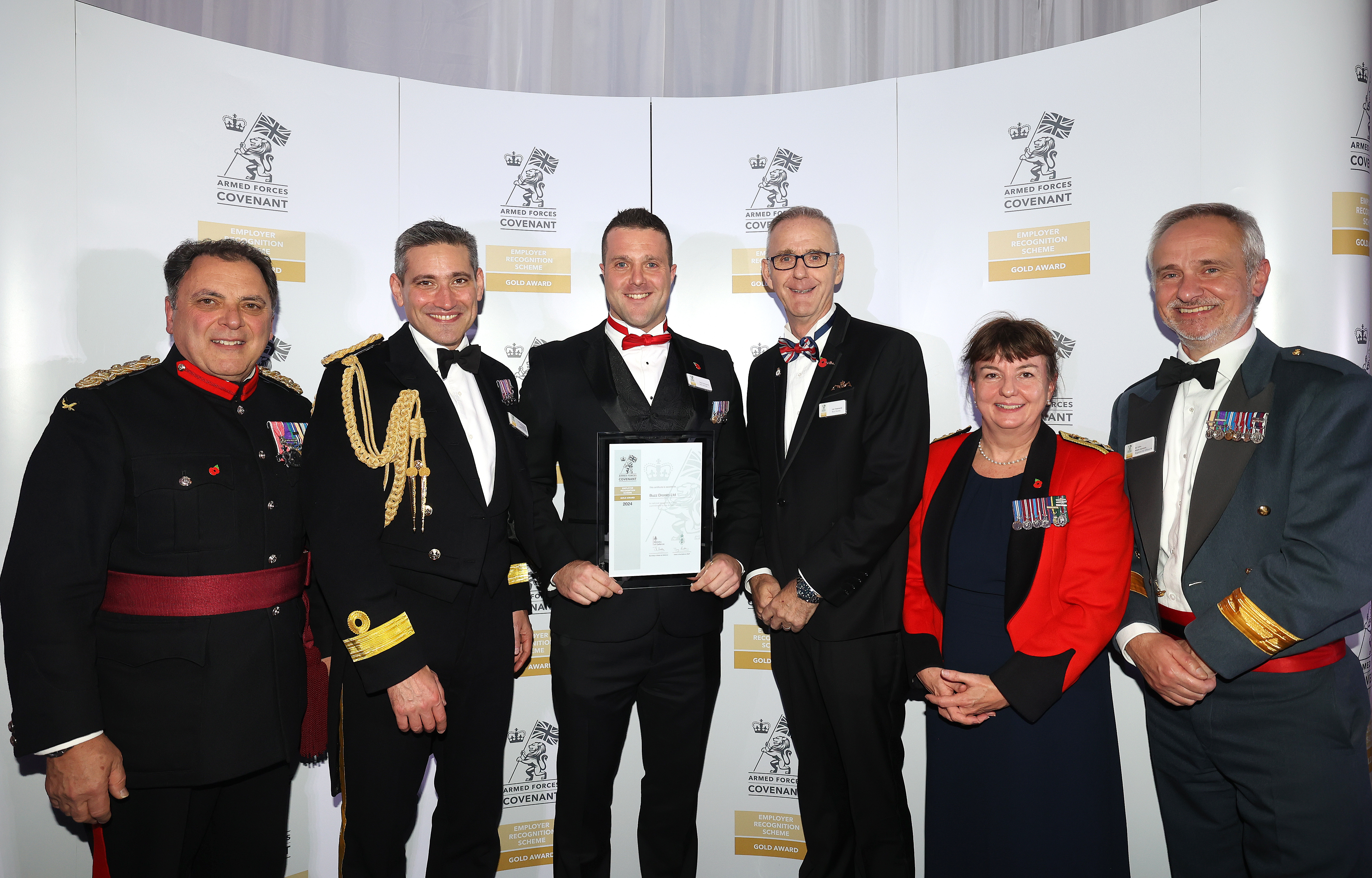
Buzz Drones achieved Gold status in 2024, marking the culmination of years of genuine commitment, advocacy, and leadership in supporting the Armed Forces community.
Why the Armed Forces Covenant Matters to Buzz Drones
As a business operating in a highly professional and safety-critical environment, Buzz Drones recognises the exceptional skills, values, and experience that service personnel bring – including discipline, leadership, planning, and resilience.
By achieving Bronze (2020), Silver (2021), and ultimately Gold (2024), Buzz Drones has demonstrated that its support for the Armed Forces Covenant is not a tick-box exercise, but a long-term commitment aligned with its core values.
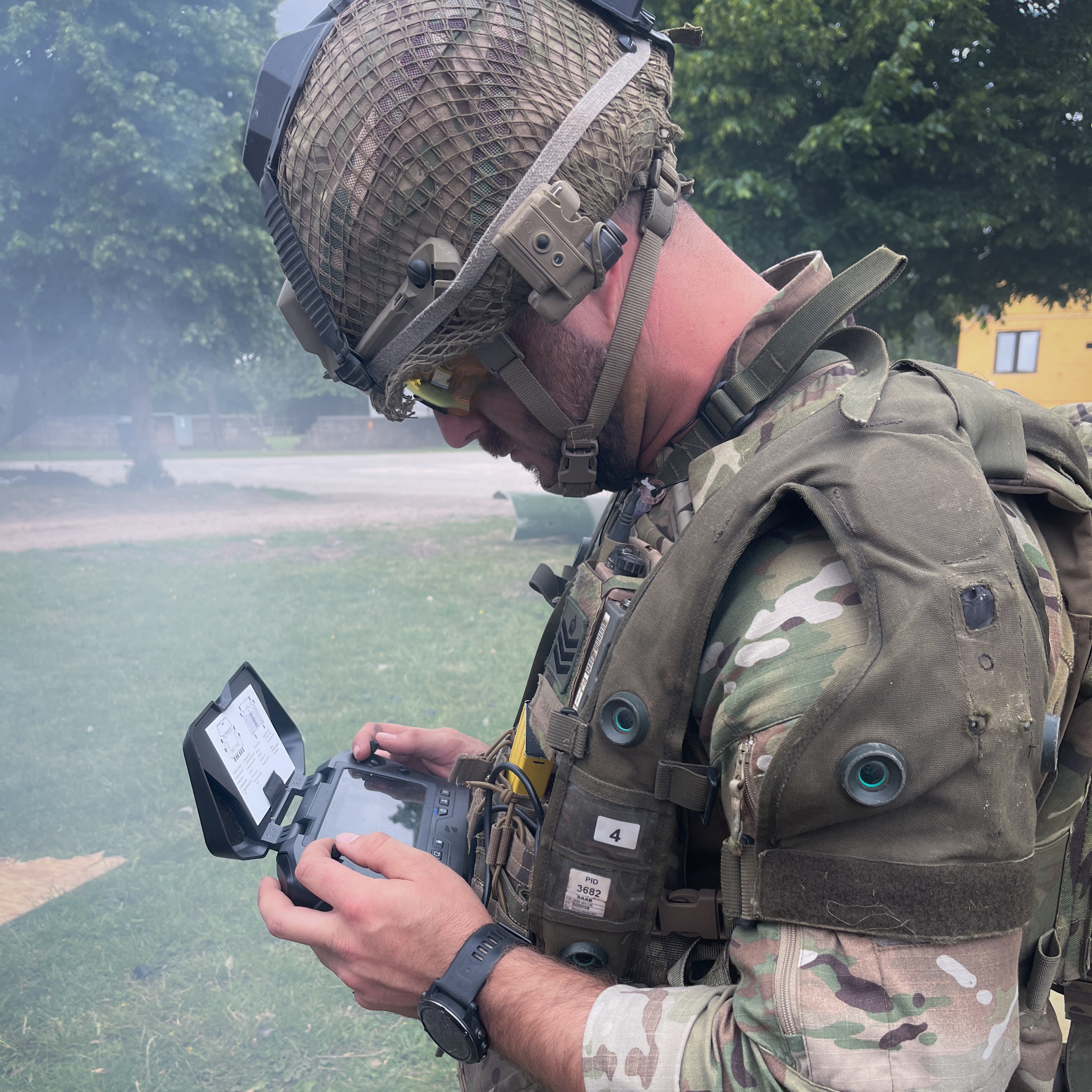
Furthermore, as a Senior Non-Commissioned Officer within the Reserves, Toby feels that it is vital to put back into the Military Community.
Final Thoughts
The Armed Forces Covenant and Employer Recognition Scheme provide a clear framework for organisations to support those who serve. Whether at Bronze, Silver, or Gold level, each step makes a meaningful difference.
For Buzz Drones, achieving Gold status represents both a milestone and a responsibility – to continue leading by example and supporting the Armed Forces community now and in the future.
If you would like to learn more about the Armed Forces Covenant or how your organisation can get involved, get in touch or explore the official MOD Employer Recognition Scheme.
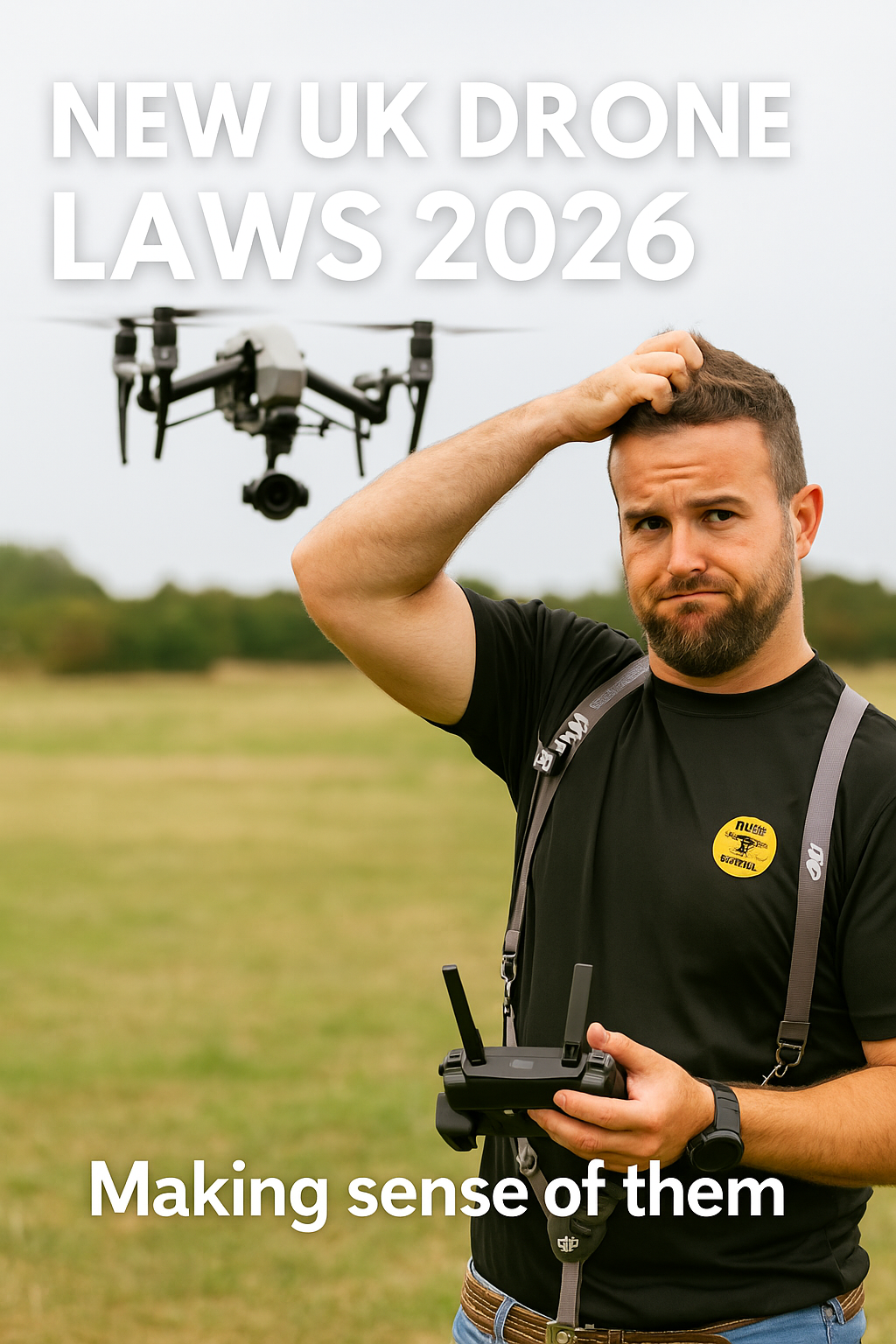
UK Drone laws – 2026
UK Drone Laws 2026

Come Jan 26, the CAA will be implementing new laws on drone flying.
Are you ready for the change?
Introduction
At Buzz Drones, we’ve always believed in responsible, safe drone operation. As of 1 January 2026, the UK’s drone regulatory landscape is set to shift significantly — and that’s why we’re here to help.
Whether you fly drones for fun or in a business capacity, you’ll want to understand what the changes are, how they affect you, and how to stay compliant.
In this post, we’ll explain the key upcoming changes, the implications for drone users, and how Buzz Drones can support you with training, audits, and hands-on guidance.
If you’re looking at buying your first drone – we have just the blog for you!
What’s Changing in January 2026?
From 1 January 2026, the UK’s Civil Aviation Authority (CAA) and the Department for Transport will introduce a refreshed regulatory framework for drones and model aircraft.
Key changes include:
-
Drone Class Marking (UK0 – UK6)
Drones sold in the UK under the Open Category will need a UK class mark (UK0 to UK6), indicating conformity with safety standards. -
Legacy and EU-class drones will continue under transitional rules until 31 December 2027.
-
Remote ID / Direct Broadcast Requirements
From 2026, drones in classes UK1, UK2, UK3, UK5 and UK6 must broadcast their ID and position in real time (Remote ID). -
For drones in class UK0 or legacy/non-class drones with cameras weighing ≥ 100 g, the requirement to broadcast Remote ID comes in later (1 January 2028).
-
Lower Weight Thresholds for Registration / Flyer ID / Operator ID
Under the new rules, 100g becomes a new threshold. Drones over 100g may require you to hold a Flyer ID, and drones with cameras over 100g may require an Operator ID. The shift away from the “toy drone” exemption model means the prior 250g boundary is being revised. -
Revised Subcategories: “Over”, “Near”, “Far” People
The familiar A1 / A2 / A3 designations are being renamed to “Over People” (A1), “Near People” (A2), and “Far from People” (A3). With updated distance rules depending on drone class. For example, class-marked UK0 / UK1 drones may fly closer to people under “Over People” rules, with tighter distances allowed. -
Night Operations & Lighting Requirements
After dark, drones are to display a flashing anti-collision light. -
Geo-Awareness / Soft Geo-Fencing
Drones in certain classes (UK1, UK2, UK3) must include geo-awareness functionality (soft geofencing) to recognise restricted zones. -
Transition Periods & Legacy Drones
Many legacy (non class-marked) drones will still be allowed to fly under existing rules through transitional periods.
Importantly, EU class-marked drones will be accepted until end of 2027 while UK class-marking becomes more widespread.
Additionally, the CAA is now appointed as the Market Surveillance Authority (MSA). Giving it powers to enforce product standards, and ensure manufacturers, importers and distributors comply.

What These Changes Mean for Drone Users
Hobbyists / Recreational Users
-
If your drone weighs less than 100 g, many of the new rules won’t immediately apply — but you may still choose to register or get Flyer ID for safety and flexibility.
-
If your drone is between 100 g and 250 g (or has a camera), you will likely now need to obtain a Flyer ID and possibly an Operator ID.
-
If your drone already has an EU class mark (C0, C1, etc.), you may be able to operate under those markings until 2027 under transitional rules.
-
Check whether your aircraft has the new UK class marking, whether Remote ID is enabled or retrofit possible.
Commercial / Business Operators
-
Your fleet may need to migrate to class-marked drones (UK classes) to maintain privileges (e.g. closer to people) in the Open category.
-
Ensure Remote ID broadcasting capability is in place or retrofit modules before the deadline.
-
Examine your Standard Operating Procedures (SOPs), operations manuals, insurance and reporting procedures in light of the new compliance and technical requirements.
-
If you use Specific or Certified operations (e.g. BVLOS, complex missions), you’ll want to integrate these new rules into your risk assessments. You’ll need to get comfortable with UK SORA or PDRA routes with the updated regulatory framework.
Model Aircraft & Clubs
-
Model aircraft in UK4 class may stay exempt from some class-marking requirements for now, but other rules (IDs, lighting, geo-awareness for cameras) may still apply.
-
Clubs should plan to support members in transitioning to the new rules and may wish to organise group familiarisation sessions.
UK Drone Class Table
| Class | Weight Limit | Key Features | Examples |
|---|---|---|---|
| UK0 | < 250 g | – No Remote ID required (until 2028) – Can fly Over People (A1) – No Operator ID if no camera |
Mini drones like DJI Mini 2 SE, Mini 3 |
| UK1 | < 900 g | – Remote ID required – Geo-awareness – Can fly Over People (A1) – Anti-collision light for night ops |
DJI Mini 4 Pro, Autel Nano+ |
| UK2 | < 4 kg | – Remote ID – Geo-awareness – Near People (A2) – Requires Flyer ID + Operator ID |
DJI Air 3, Mavic 3 series |
| UK3 | < 25 kg | – Remote ID – Geo-awareness – Far from People (A3) – Stronger separation distances |
DJI Inspire 3, Freefly Astro |
| UK4 | Model aircraft | – Designed for model flying clubs – Specific rules for traditional model aircraft |
Fixed-wing or helicopters used in clubs |
| UK5 | < 25 kg (certified) | – Remote ID – Near People with operational approval – Higher risk commercial ops |
Larger professional rigs |
| UK6 | > 25 kg (certified) | – Remote ID – Certified operations – Similar to manned aviation rules |
Heavy lift drones, cargo UAVs |
Quick Notes for Operators
📡 Remote ID: Compulsory for UK1, UK2, UK3, UK5, UK6 from Jan 2026.
💡 Night Flying: Flashing anti-collision light required.
🪪 Registration: New threshold of 100 g for Flyer ID / Operator ID if camera-equipped.
📍 Geo-Awareness: Drones must alert pilots to restricted zones.
Still unsure? Feel free to contact us and we will be more than happy to help!
Why First Aid is Essential for Drone Operators
Why First Aid is Essential for Drone Operators
Whether you’re surveying a roof, capturing footage, or flying in rural locations, being a drone operator means working in a variety of environments — often alone and sometimes far from immediate help. That’s why every drone pilot should carry a well-equipped medical kit in their vehicle and maintain basic first aid training.
At Buzz Drones, safety is one of our top priorities. As drone professionals and industry advocates, we recommend all UAV operators treat first aid readiness as a non-negotiable part of their operating setup.
Lone Working and Hazards in the Field
While operating drones might seem low-risk at a glance, there are several real-world risks every pilot should be aware of:
-
Lone working: Many drone jobs, like surveying or inspecting sites, require you to be alone or in remote areas.
-
Burn and cut hazards: Propellers, batteries, and equipment can cause injury — especially in emergencies or during setup/takedown.
-
Unexpected public emergencies: You may witness or be first on the scene to a medical emergency involving a member of the public.
Being prepared could save a life — including your own.
What Medical Kit should you keep in your vehicle?
The location of our FAK

At Buzz Drones, our team keeps vehicle medical kits that are:
-
Easily accessible – Not buried under gear
-
Routinely checked – Items go out of date or get used
-
Clearly known – Ensure anyone on site knows where it is
-
Simple to use – Carry what you’re trained to use
Here’s a solid kit recommendation for drone operators:
Recommended Vehicle First Aid Contents:
-
Tourniquet – For severe bleeding control
-
Tough cut scissors – Cuts through clothing and straps
-
Emergency trauma bandage – For quick dressing of injuries
-
Aspirin – For suspected heart attacks (with caution)
-
Neck brace (optional) – If trained in its use
-
Plasters & bandages – For minor wounds and abrasions
-
Disposable gloves – Personal protection for the responder
-
Burn gel or dressing – For battery-related burns or heat injuries
-
CPR face shield – For safe resuscitation
-
Basic instruction card or prompt sheet – Helpful in high-stress scenarios
First Aid Training – What Should Drone Operators Have?
As a drone pilot, a basic first aid qualification is an excellent start. At Buzz Drones, our founder holds First Aid at Work + Forestry certification due to a background with HMA Tree Care. While the Forestry addition is beneficial for rural operations, the standard First Aid at Work is a great place to begin for most operators.
We recommend:
-
First Aid at Work (FAW) – Covers critical skills like CPR, bleeding control, burns, and basic trauma.
-
Emergency First Aid at Work (EFAW) – A shorter, one-day version, suitable for most commercial pilots.
-
Outdoor or Remote First Aid Courses – Especially relevant if you’re flying in hard-to-access areas.
-
Refresher training every 3 years, and annual skill updates where possible.

Final Thoughts from Buzz Drones
Carrying a medical kit isn’t just for show — it’s about being prepared for the worst so you can operate at your best.
At Buzz Drones, we believe safety is just as important as flying skills. Equipping yourself with the right medical gearand first aid training is part of being a professional drone operator. Whether you’re a solo pilot or part of a larger UAV team, make sure you and those around you are ready for anything.
Stay Safe. Stay Professional. Fly Smart.
📍 Buzz Drones UK – Your trusted partner for drone services, training, and safety support.
📞 Want advice on gear or training? Contact our team today!
CAA Open Category Drone Rules
Open Categories Explained

Understanding the CAA Open Category Drone Regulations in the UK
The Civil Aviation Authority (CAA) governs drone operations in the UK, ensuring safety and compliance through its regulations. If you’re a drone operator, it’s essential to understand the CAA’s Open Category regulations, which apply to low-risk drone operations. In this blog, we’ll break down the Open Category rules, subcategories, and how they affect drone pilots.
What is the Open Category?
The Open Category is designed for drones that pose minimal risk to people and property. It applies to operations where the drone:
-
Weighs under 25kg.
-
Is flown within visual line of sight (VLOS).
-
Does not exceed an altitude of 120m (400ft).
-
Avoids flying over crowds or in restricted airspace without permission.
Therefore, these rules allow hobbyists and professionals to operate safely without requiring special permissions.
Open Category Subcategories
The Open Category is divided into three subcategories: A1, A2, and A3.
A1 – Fly Over People (Limited)
-
Suitable for lightweight drones (e.g., under 250g or C0/C1 class drones).
-
Can be flown over uninvolved people but not over crowds.
-
No minimum distance requirement, but pilots must minimise risk.
Since these drones are lightweight, they present less risk, making them ideal for beginners.
A2 – Fly Near People
-
For drones weighing between 500g and 2kg (C2 class drones).
-
Pilots must maintain a safe distance of at least 30m from uninvolved people, or 5m in low-speed mode.
-
Requires an A2 Certificate of Competency (A2 CofC).
Thus, if you want to fly closer to people, obtaining the right certification is crucial.
A3 – Fly Far from People
-
For drones weighing up to 25kg (C3/C4 class drones).
-
Must be flown at least 150m from residential, commercial, or industrial areas.
-
Must stay away from uninvolved people.
Because of their size and weight, these drones require greater separation to maintain safety.

Drone Classifications & CE Marking
Drones are classified as C0 to C4 under the new EU-derived regulations, determining which subcategory they can operate in. Older drones without a CE class marking are limited to legacy provisions until 2026.
As a result, understanding your drone’s classification is essential for compliance.
Training & Registration Requirements
-
Operator ID – Required for drones over 250g or those with cameras.
-
Flyer ID – Required if operating drones over 250g or any with risk factors.
-
A2 CofC – Required for A2 category operations.
This ensures that pilots meet the necessary competency levels before flying.
Key Takeaways for Drone Operators
-
Know your drone’s classification and which subcategory applies.
-
Maintain safe distances from people and structures.
-
Ensure you have the correct certification and registration.
-
Always check local airspace restrictions before flying.
Following these steps will help you stay within the law and operate safely.
Need Help With Drone Training or Compliance?
At Buzz Drones, we offer CAA-compliant training to help you fly legally and safely. Whether you need an A2 CofC or general guidance on UK drone laws, get in touch with our experts today!
Looking to buy your first drone? Take a look at our blog for ideas.
Stay compliant, fly safe, and explore the skies with confidence!
Contact Us
General: hello@buzz-drones.co.uk
Accounts: accounts@buzz-drones.co.uk
Sales: sales@buzz-drones.co.uk
Call: 07739611000

Our Policies
Latest Posts
- How Valuable Are FPV Simulators — And Do They Improve Real Flying? 22/03/2026
- Drone Maintenance: Proactive vs Reactive – Protecting Your Investment in the Air 18/02/2026
- Armed Forces Covenant – What is it? 06/01/2026
- UK Drone laws – 2026 04/10/2025
- Why First Aid is Essential for Drone Operators 14/07/2025